
A sweeping long-term oil agreement between the United States and Venezuela, potentially giving Washington access to around one-fifth of Venezuela’s crude reserves, is facing questions from energy experts and legal specialists over its legality, transparency and practical implementation.
The unprecedented agreement, announced by U.S. President Donald Trump and confirmed by Venezuela’s interim President Delcy Rodriguez, is expected to place approximately 65 billion barrels of recoverable oil under U.S. control.
That volume exceeds the United States’ total proved oil reserves, estimated at around 46 billion barrels.
The agreement was negotiated without a competitive bidding process and remained confidential until its announcement. It comes as Venezuela continues a major reform of its hydrocarbons legislation and works to move numerous oil ventures and contracts onto new terms.
Trump has said the arrangement will involve a partnership with private businesses, but U.S. authorities have not publicly identified which companies could be selected to operate the Venezuelan oilfields.
Questions have also emerged over the possible involvement of private energy companies seeking to participate in the project.
According to Rodriguez, the agreement is expected to remain in force for at least 25 years and could generate approximately $100 billion in investment, along with an estimated $209.3 billion in royalties and taxes.
However, legal and energy experts have raised concerns about whether the structure of the agreement complies with Venezuelan law, particularly because the United States is expected to play a central role in selecting the operating model and companies involved.
There are also questions surrounding the level of tax revenue Venezuela would receive, with some analysts arguing that the announced figures could fall below what existing legislation would normally require.
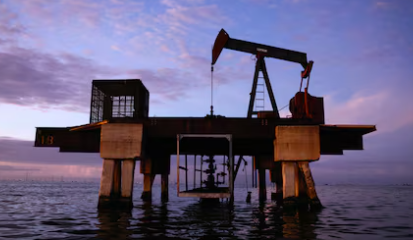
The oil covered by the agreement is expected to come from 17 fields, with most of the reserves concentrated in eight major blocks in Venezuela’s vast Orinoco Belt. Other fields are located around Lake Maracaibo, one of the country’s historic oil-producing regions.
An industry analysis estimates that the fields contain approximately 63.7 billion barrels of proved reserves, based on a technically possible recovery rate of around 20%. Fully extracting those reserves could take longer than the proposed 25-year duration of the agreement.
The areas include both existing producing fields and undeveloped resources. This could allow operators to begin with current exportable production while gradually expanding output through infrastructure repairs around Lake Maracaibo and new development projects in the Orinoco Belt.
The United States is expected to hold a 55% participation in the partnership, potentially further increasing Venezuelan crude shipments to the U.S., which already account for roughly 60% of the country’s oil exports.
Trump has also said that additional Venezuelan crude could be used to replenish the U.S. Strategic Petroleum Reserve, which has fallen to around 290 million barrels, near its lowest level in more than four decades.
The agreement comes as Washington faces pressure over higher gasoline prices amid the continuing conflict with Iran, making access to additional Venezuelan supplies increasingly significant for U.S. energy policy.