

Previously unseen videos have raised new questions about Omar al-Bayoumi, a central figure in a $1 trillion lawsuit brought by families of victims of the September 11 attacks against Saudi Arabia.
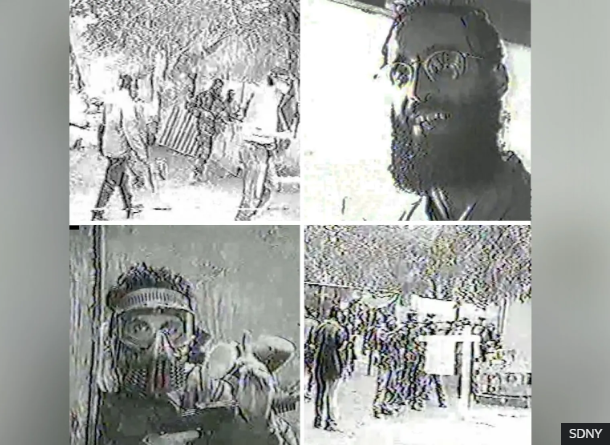
The footage shows Bayoumi interacting with Anwar al-Awlaki, who later became a leader of al-Qaeda in the Arabian Peninsula. One clip reportedly shows the two embracing, while another captures Bayoumi and Awlaki participating in a paintball session near San Diego alongside an official from Saudi Arabia’s Ministry of Islamic Affairs.
The videos are now part of the lawsuit in which 9/11 victims’ families allege that Saudi Arabia was complicit in the attacks and that Bayoumi assisted two of the 19 hijackers. Saudi Arabia and Bayoumi have consistently denied involvement in or prior knowledge of the attacks.
Bayoumi had long maintained that he was simply a student while living in the United States and denied being an extremist or a Saudi intelligence operative.
However, footage dating from the late 1990s shows Bayoumi filming paintball sessions involving Awlaki and other men near San Diego. Some participants wore military-style clothing and practiced scenarios resembling urban combat and target shooting. Investigators were later told that some participants had used such sessions as training for jihad.
Another video from January 1998 reportedly shows Bayoumi embracing Awlaki. Additional footage documents Bayoumi meeting officials and religious figures connected to Saudi Arabia’s Ministry of Islamic Affairs.
Bayoumi became an early focus of the investigation following the September 11 attacks after his name was discovered on an apartment rental agreement signed by hijackers Nawaf al-Hazmi and Khalid al-Mihdhar. British authorities arrested him in Birmingham on September 21, 2001.
Searches of his properties uncovered thousands of documents, photographs, travel records and at least 80 videotapes. Investigators also discovered a notebook page containing a sketch of an airplane and mathematical calculations involving an aircraft’s height and distance from an object on the ground.
Despite the evidence collected, Bayoumi was released on September 28, 2001, and was never prosecuted. Some investigators later questioned why key evidence was not fully shared among agencies or presented to the 9/11 Commission.
The 9/11 Commission ultimately reported that there was no evidence Bayoumi held extremist views, although some staff members reportedly questioned that conclusion. The Commission did not see several pieces of evidence now considered significant, including the plane diagram and paintball footage.
Bayoumi has denied knowing that Hazmi and Mihdhar were hijackers, being a Saudi spy or having any involvement in the September 11 attacks. Saudi Arabia has also repeatedly rejected allegations that the kingdom or its officials were complicit in the attacks.




