
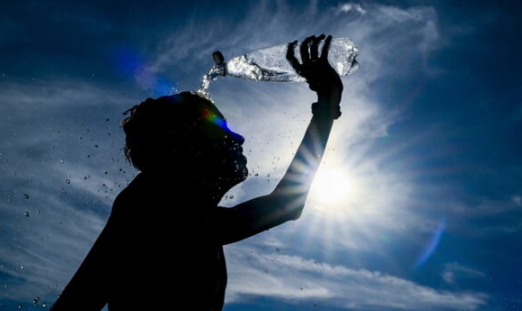

August 2026 was the hottest August ever recorded globally, with average temperatures reaching 1.65°C above pre-industrial levels, according to scientists, who warned that even more extreme heat could lie ahead.
Data from the EU’s Copernicus Climate Change Service showed that August 2026 matched July 2023 as the hottest month in recorded history. Global sea-surface temperatures also reached their highest level ever recorded for the month of August.
The record heat was measured before the expected full impact of this year’s El Niño, a naturally occurring climate pattern that raises ocean temperatures and transfers large amounts of heat into the atmosphere. Its effects can be felt worldwide through heatwaves, droughts and flooding.
The current El Niño is expected to strengthen toward the end of the year and could potentially become one of the strongest ever recorded. Climate scientists warn that the phenomenon is now occurring against the backdrop of a rapidly warming planet.
Climate scientist Friederike Otto of Imperial College London said that while El Niño is beginning to add to global temperatures, the underlying driver remains the continued burning of fossil fuels. She warned that climate change is making each El Niño event hotter and that record-breaking temperatures will continue unless the use of coal, oil and gas is reduced.
The consequences of the extreme heat recorded during August are already being felt in many parts of the world. Devastating wildfires, crop losses, heat-related deaths and disruptions to transportation, businesses and public services have been reported in numerous countries. Food prices could also face further pressure as reduced harvests affect local markets and imports.
UN climate chief Simon Stiell said the full economic and social costs of the summer’s extreme weather are still being assessed. He warned that extreme heat has placed significant pressure on transportation and healthcare systems while also pushing up the cost of essential goods, including food.
Stiell called on governments to accelerate the transition toward clean energy, protect forests and oceans, and strengthen societies’ ability to cope with a changing climate.
Although global temperatures exceeded the 1.5°C threshold referenced in the 2015 Paris climate agreement, a temporary breach does not mean the long-term target has officially been considered failed. Temperatures would need to remain above that level over a sustained period. However, the United Nations has acknowledged the current overshoot and warned that large-scale carbon removal may eventually be required to bring temperatures back down.
Copernicus data also showed unusually dry conditions across parts of western and central Europe, Scandinavia and southeastern Europe during the summer. Above-average dryness was also recorded across areas of the southern United States, northern Mexico, Canada, the Maghreb, the Horn of Africa, Siberia, central Asia, China, South America, southern Africa and northern Australia.
Scientists warn that as temperatures continue to rise beyond 1.5°C, the risk of triggering major climate tipping points also increases. Such events could cause long-lasting or irreversible changes to important natural systems, including Arctic ice and the Amazon rainforest.
Ruth Fuller, a senior climate adviser at WWF UK, said the repeated breaking of temperature records this year is increasing the risk of natural systems reaching critical tipping points.
Samantha Burgess, Strategic Lead for Climate at the European Centre for Medium-Range Weather Forecasts, said August 2026 represented an extraordinary month in the global climate record.
She noted that the month was not only the warmest August ever recorded but also tied the record for the hottest month globally, with temperatures reaching 1.65°C above pre-industrial levels. Combined with record ocean temperatures and an exceptionally warm summer across western Europe, she said the data demonstrates how climate change is intensifying extreme conditions in both the atmosphere and oceans.
The effects are increasingly being felt by communities, economies and ecosystems around the world.




