
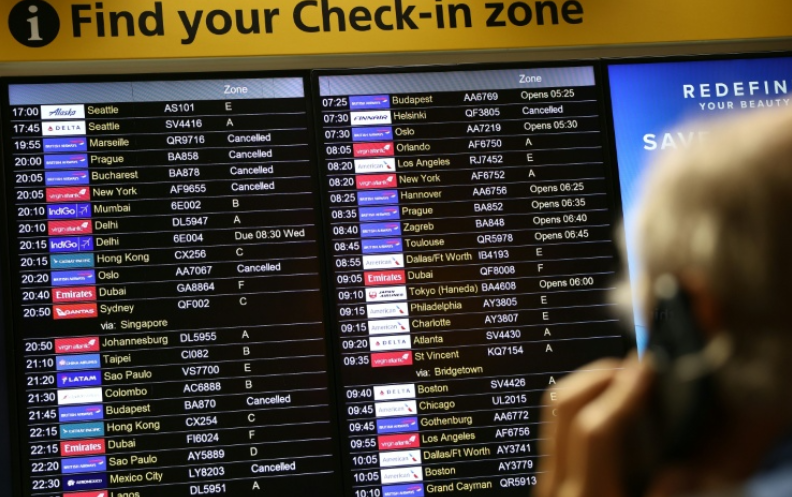

A major technical failure in Britain’s air traffic control system caused widespread disruption at some of the country’s busiest airports, leading to more than 600 flight cancellations and leaving hundreds of thousands of passengers facing delays and uncertainty.
The disruption affected the flight-data processing system operated by NATS, the UK’s air traffic control provider. Heathrow, Gatwick, Stansted, Manchester and Birmingham were among the airports hit hardest, while disruption was also reported elsewhere across England and Scotland.
By Tuesday evening, more than 600 flights had been cancelled and hundreds more delayed. Major airlines including British Airways, easyJet and Ryanair were among those affected.
NATS initially confirmed that a technical problem had been detected in its flight-processing system and said engineers were working to restore normal operations.
The operator later announced that the fault had been resolved and its systems were functioning normally again. However, disruption continued as airports and airlines worked through a significant backlog of flights created during the outage.
NATS apologized for the disruption and said it was working to clear the backlog as quickly as possible.
Airports warned that delays and cancellations could continue even after the technical issue was fixed, as aircraft and crews had been left out of their scheduled positions, creating a knock-on effect across the network.
Manchester Airport said it expected to operate a full schedule on Wednesday but warned that terminals could be busier than usual as disrupted flights were rearranged.
Passengers were advised to check their flight status directly with their airline before travelling to the airport.
The latest failure has also renewed concerns about the resilience of Britain’s air traffic control infrastructure. It marks the third major incident involving NATS systems in just over three years, prompting fresh criticism from airlines.
Ryanair said more than 65,000 of its passengers were affected by the disruption and called for NATS chief executive Martin Rolfe to resign. Wizz Air also urged authorities to introduce urgent reforms.
UK Transport Secretary Heidi Alexander welcomed the restoration of the system but warned that it would take time for air traffic to return fully to normal.
She also called for lessons to be learned from the incident and for assurances that the critical systems supporting Britain’s aviation network are resilient enough to handle future disruptions.




