
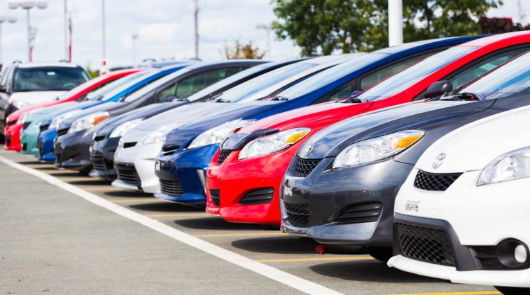

Although the number of cars on the road continues to grow, a significant proportion of Albanians say they cannot currently afford to purchase a personal vehicle.
According to data published by Eurostat, 41% of Albanians said in 2023 that they could not afford to buy a car. This figure is significantly higher than the European Union average, which stood at 5.6% in 2023 and 5.5% in 2025.
Albania also recorded the highest rate in the region. In Serbia, 16% of people said they could not afford a vehicle in 2023, with the figure falling slightly to 15% in 2025.
In North Macedonia, only 13% of the population could not afford a car, according to data for 2024. In Montenegro, the proportion was even lower, at just 8.9% in the same year. Data for Bosnia and Herzegovina and Kosovo were not available for this indicator.
The highest proportion of Albanians unable to afford a car was recorded among people living alone, with 66% of men and 88% of women in this category reporting financial difficulties in purchasing a vehicle.
Despite a significant increase in the number of vehicles on the road in recent years, with approximately 100,000 cars registered for the first time in each of 2024 and 2025, Albania remains one of the countries with the lowest number of vehicles relative to its population.
According to separate data from Albania’s General Directorate of Road Transport Services (DPSHTRR), the country had a total of 847,000 privately owned passenger cars in circulation at the end of 2025.
Relative to the population, more than one in three residents owns a car, equivalent to 360 passenger cars per 1,000 inhabitants. This figure is almost half the European Union average of 578 cars per 1,000 residents, according to Eurostat data.
However, following a downward revision of its population figures, Albania has moved up the rankings and now places third in the region, behind Montenegro, with 442 cars per 1,000 residents, and approaching Serbia, with 394. Albania has overtaken North Macedonia and Bosnia and Herzegovina, both at 338 cars per 1,000 residents.
Across Europe, Kosovo has one of the lowest rates, with 241 cars per 1,000 residents, while Turkey records an even lower figure of 203.
Italy leads Europe with 709 cars per 1,000 residents, followed by Finland with 671 and Cyprus with 670.
Europe
According to Eurostat, 5.5% of the European Union’s population could not afford a car for personal use in 2025.
The highest proportion was recorded in Finland, at 11.3%, followed by Hungary at 10.4% and Bulgaria at 10%.
At the other end of the scale, the lowest rates were recorded in Cyprus, at 1.6%, Slovenia, at 1.7%, and Croatia, at 2.6%.
This indicator measures the proportion of people living in households that report being unable to afford a car for personal use.




