
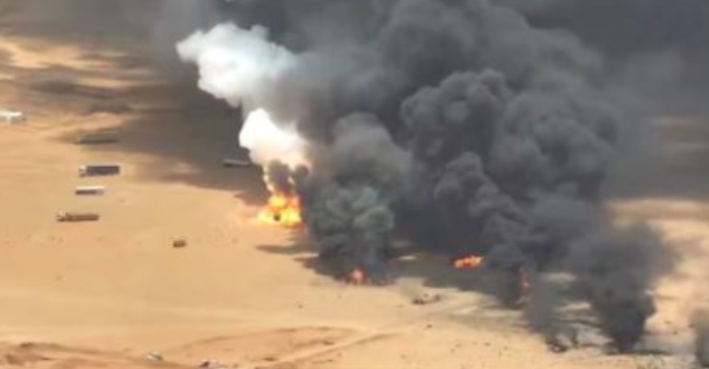

A drone attack has struck oil infrastructure in Saudi Arabia, raising fresh concerns over global energy security and increasing pressure on Riyadh.
Saudi authorities were forced to temporarily shut down the strategic East-West oil pipeline following the drone strike, which Saudi and Iraqi officials said originated from Iraqi territory.
The attack caused damage and injuries. Baghdad has launched an investigation and dismissed a military commander responsible for Maysan province, while U.S. President Donald Trump said Iran was highly likely to be behind the attack.
The East-West pipeline, which stretches roughly 1,200 kilometers, is particularly important because it allows Saudi Arabia to transport oil to the Red Sea while bypassing the Strait of Hormuz. The pipeline has carried an estimated 4 to 5 million barrels of oil per day, equivalent to around 4–5% of global supply.
At the same time, Iran-backed Houthi forces have advanced along Yemen’s western coast and taken control of the strategically important Perim Island, located at the entrance to the Bab el-Mandeb Strait.
The strait is one of the world’s most critical maritime routes, carrying oil and other goods between the Red Sea and the Indian Ocean.
If the Houthis gain full control over the corridor, pressure on global energy markets could intensify further, particularly as oil prices have already climbed above $100 per barrel.
The Bab el-Mandeb route connects the Red Sea with the Gulf of Aden and serves as a vital artery for the transportation of goods and energy supplies to Europe and Asian markets.
The latest developments present another major challenge for both Saudi Arabia and the United States. Riyadh is seeking greater U.S. support in confronting the Houthis, while Washington faces the possibility of another military front opening in a region already affected by multiple conflicts.
A broader escalation could have consequences extending well beyond regional security. Disruptions to key shipping routes and further attacks on oil infrastructure could delay supplies and place additional upward pressure on global energy prices.
The Middle East is therefore facing another critical moment, with each new attack increasing the risk that the conflict could spread further and directly affect international trade and energy supplies worldwide.




