

The Kosovo Specialist Chambers in The Hague are set to deliver their verdict on Wednesday in the war crimes trial of former Kosovo President Hashim Thaci, bringing a closely watched case stemming from the 1998–99 war to a decisive moment.
Prosecutors have requested prison sentences of up to 45 years for Thaci, 58, and three other senior commanders of the Kosovo Liberation Army (KLA). All four defendants have denied the charges, while their defense teams have called for acquittals.
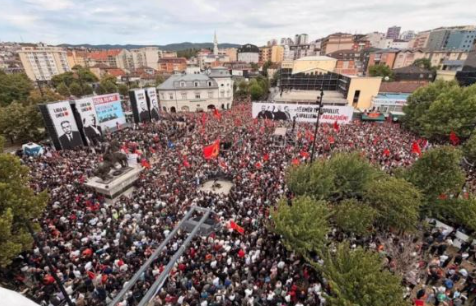
The verdict is expected to be announced in The Hague at 10:00 a.m. Several cities across Kosovo have installed large screens showing countdowns to the decision. Thousands of people also gathered in Prishtina over the weekend to demand the release of the former KLA leaders.
The proceedings have once again highlighted how deeply the memories of the Balkan wars remain embedded across the region, as well as how strongly ethnic and political divisions continue to shape public opinion.
The case could also have broader political consequences. Analysts say the verdict may affect Kosovo’s relations with Western countries, particularly the United States, while potentially creating additional tensions with Serbia, which continues to reject Kosovo’s independence.
Charges Stemming From the Kosovo War
Thaci and the other former KLA commanders face charges including persecution, murder, torture and enforced disappearance involving both Kosovo Albanians and Serbs during and shortly after the 1998–99 conflict.
Prosecutors have alleged that more than 100 political opponents and people considered collaborators with Serbian security forces were killed as part of an effort by elements of the KLA to gain political control.
Thaci’s defense has rejected the allegations, arguing that the case lacks evidence directly connecting him to the alleged crimes. His lawyers have also disputed claims that he exercised effective control over other KLA commanders.
A “Seismic Event” for Kosovo
The Kosovo Specialist Chambers, staffed by international judges and lawyers, remain deeply unpopular among many Kosovars. The court was established in 2015 following international pressure and operates under Kosovo law to prosecute alleged wartime crimes committed by former KLA members.
Concerns over witness intimidation meant that a significant number of prosecution witnesses testified behind closed doors, further contributing to public distrust of the institution.
For many in Kosovo, Thaci remains a symbol of the country’s struggle for independence.
The verdict could have significant consequences for Kosovo’s political landscape, according to political analyst Agon Maliqi of the Atlantic Council’s Europe Center. An acquittal could strengthen Thaci’s political camp and potentially revive support for closer cooperation with Western allies on regional security.
A conviction, meanwhile, could deepen Kosovo’s already complicated relationship with the West, particularly after years of political disagreements between Prishtina and its international partners.
Maliqi also warned that the verdict could immediately affect already-sensitive interethnic relations inside Kosovo, as strong emotions surrounding the case could be exploited by radical groups or outside actors seeking to increase tensions.
The decision could also influence the longer-term prospects for relations between Kosovo and Serbia, depending largely on how political leaders and the public in Belgrade respond.
Thaci Could Still Face Another Sentence
Even if Thaci is acquitted of the wartime charges, his release may not be immediate. Prosecutors are seeking a separate six-year prison sentence against him in another case involving allegations of witness interference.
Thaci has also denied those allegations.




